Sage Meyers - Solar Energy Professional
Sage’s path into engineering was shaped by an early love for the outdoors and a growing awareness of environmental responsibility, but her journey is equally defined by resilience, self-trust, and the courage to choose her own direction, even when it meant going against expectations.

Early Roots: Where It All Began
Sage’s love and passion for the environment started at a young age. Growing up in Alberta near the Rocky Mountains, she and her family spent a lot of time outdoors enjoying activities such as hiking, camping, quadding, and fishing. She attributes her love for the environment to these early experiences. In sixth grade, Sage first learned about climate change and was motivated to take action. At the time, this looked like joining her school’s recycling club, and as I continued to learn more about her story, it became clear that these small actions were just the beginning of something much bigger.
Discovering Engineering
Sage also knew she wanted to be an engineer very early on by the eighth grade. She enjoyed the challenges of math and science, describing them as puzzles with clear, non-ambiguous answers. At the time, many of her friends, mostly boys, shared similar interests. They had older siblings pursuing engineering in university, which is how Sage was first exposed to the field. As her friend group became interested in engineering, she found herself inspired as well. “I was like, whoa, maybe I could be an engineer. I didn’t know what that meant at all, but it sounded cool, and it sounded challenging, so I was like, I guess I want to be an engineer too!” This realization came early and felt significant. As she began looking into what it would take to become an engineer, she came across admission averages as high as 97%. This is where her anxiety with engineering began questioning whether she would even be able to get in, despite being four years away from applying.
Academic Pressure and Resilience
Sage acknowledges that the stress of not feeling good enough, smart enough, or not having good enough grades, is something that can follow you up until you are done with university, until you no longer have to be associated with a percentage or letter grade. It can be very disheartening, but the advice that she has for those seeking to pursue engineering is to give it your all: get all of your prerequisites and get as high of grades as you can. She also wants to clarify that she was not a straight A student, or one of those students who could get by on a whim. She had to work for every grade she earned, and sometimes even despite her hard work, it still didn’t pass off. Your grades are not the only measure of your intelligence and capabilities. She knew that failure was not an option for her and that she was willing to work harder than everyone in the room to make it happen and this is what allowed her to pursue her engineering goals.
“The only reason you will not become an engineer is if you don’t want to be an engineer. Anyone can become an engineer if they want to, it’s about finding what you’re good at and what excites you.”
Soccer, Choices, and Finding Her Path
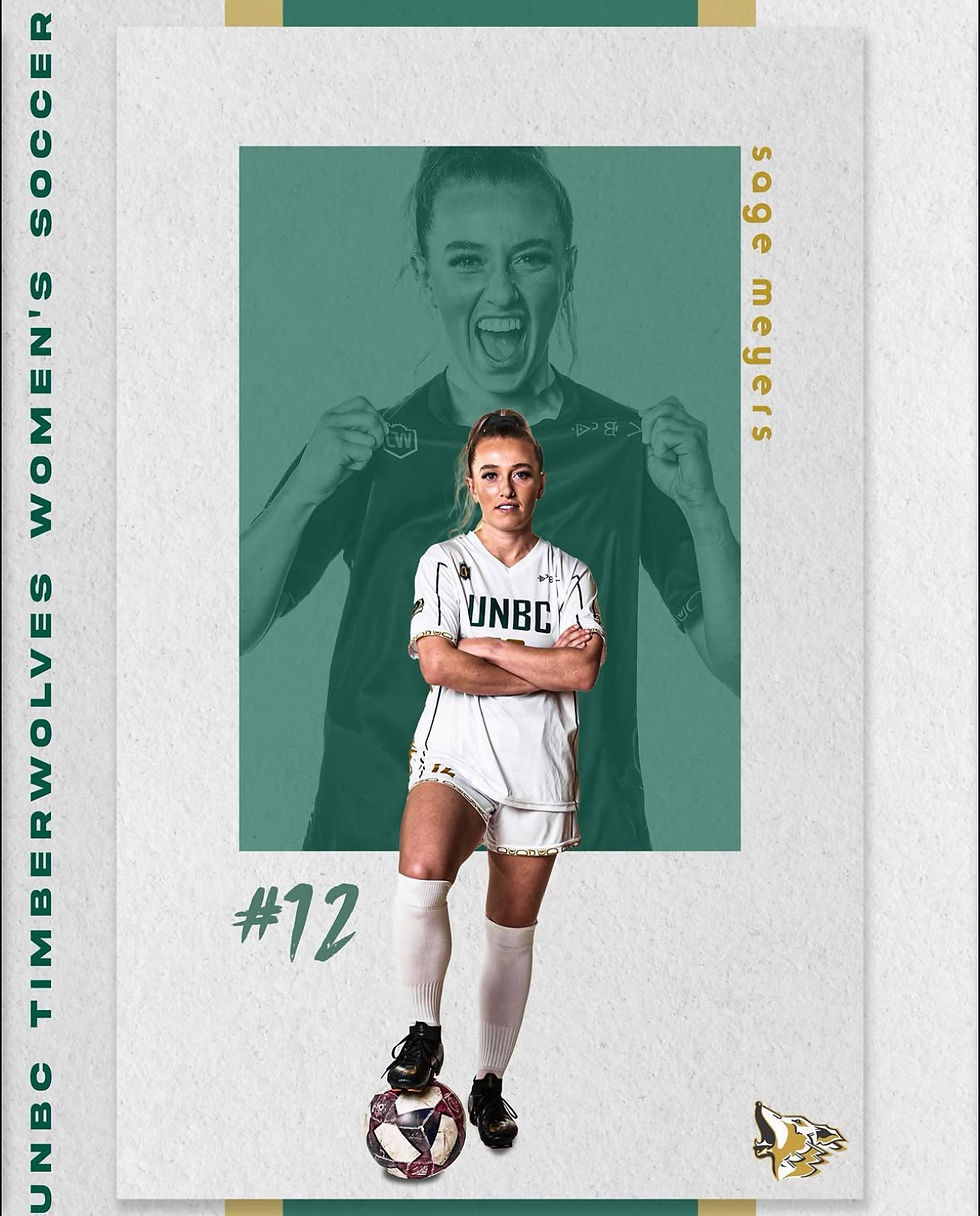
Another important part of Sage’s life was soccer. She started playing at nine years old, then played competitively starting in seventh grade and throughout high school. One of her goals was to earn a scholarship to play at the university level. In high school, Sage stayed dedicated and achieved strong grades to apply for engineering. She applied to two programs: one in environmental engineering away from home, and one closer to home in mechanical engineering technology that would lead to an energy engineering degree. She had the opportunity to play soccer at both universities. While she was excited about moving away for environmental engineering, the local option offered the possibility of playing soccer alongside her sister. Ultimately, despite being accepted into the environmental engineering program, she chose to stay close to home for her first year. Her decision was influenced by a mix of family expectations, guilt, and nerves about leaving.

During her first year while she was studying mechanical engineering technology in Calgary, she went on a trip to visit her boyfriend at the time who was ironically attending the same university where she had applied for and got into the environmental engineering program the year before, and made the soccer team.
Experiencing campus life living in dorms, seeing the facilities, and being around the soccer environment sparked something in her. She realized that she truly wanted to be there. Although she didn’t dislike her current program, she recognized that she didn’t feel fulfilled.
“I was making choices based on what other people wanted and thought was best for me, but not actually for myself, and that can lead to a very unhappy life.
You have to listen to yourself.”
The very next day, she reapplied to the program, was accepted, and was back in contact with the head coach of the soccer team.
University Challenges and Growth
University came with its challenges: a full course load, student loans, and the rising cost of living. She also unfortunately tore her ACL during preseason of what would’ve been her first year at the new university.

This changed a lot right out of the gate as she struggled with some identity loss and having to live in a new city with new people while also trying to recover from a major injury and then surgery all the while, also trying to balance and get through her first year of engineering.
However, this also ended up having a silver lining. By needing to take time away from soccer and recover from her injury, she had the flexibility to explore co-op opportunities and live and work in new cities.
Navigating a Male-Dominated Field
Throughout her journey, Sage also experienced what it means to be a woman in a male-dominated field. There were instances where she was asked to stay in the lab while her male peers were sent into the field, based on assumptions that she didn’t want to get her hands dirty, couldn’t lift equipment, or was “too glamorous.” These experiences were frustrating, but they became a source of motivation. Her advice to women in engineering or young girls considering it is to use other people’s limiting beliefs as fuel. Let it drive you. Let people underestimate you. Focus on your work: the problems you need to solve, the studying you need to do, and your path toward that iron ring. And when necessary, don’t be afraid to stand up for yourself.
The Power of Networking and Taking Risks
Networking became one of the most important factors in Sage’s career. While studying in Vancouver, she met someone working in the energy sector in California, an area she was very interested in. That connection led to an internship opportunity. Around the same time, she also received a fly-in fly-out mining offer that would have provided significant income and overtime, and was the option many people encouraged her to take. However, it didn’t align with her long-term goals, and she saw California as a better investment into herself.

She chose the California energy internship instead. That decision opened doors, allowing her to build connections, gain relevant experience, and ultimately receive a fulltime offer. While there was some luck involved, Sage emphasizes that being personable and having strong social skills can take you very far, especially in engineering.
Shortly after Sage received her job offer in California, her boyfriend at the time also received a job offer which was in New York City. Sage played soccer in New York in 2017 and absolutely loved it. She even got a scholarship offer to play for a college there, but turned it down due to family pressure and feeling guilty about it being so far away from home. And though she liked California and loved her job and “second family” she had made there, she didn’t fully feel fulfilled living there. Though scary and risk filled, she ultimately saw this as an incredible opportunity to live and work somewhere, she had always wanted to.
Sage turned her job down in California and moved to New York with no job…a high risk, yet high reward choice, but ultimately one that meant staying true to herself. Fortunately, within a couple months of moving across the country, she was able to secure a job through connections she had previously made in California. She has been there ever since.
Advice: Finding Your Own Path
When you are younger, the biggest thing is figuring things out - what you like and what you don’t like. It is important to pay attention to what you do like. How can young women take their passion for sustainability into actionable career steps? Sage emphasizes starting with curiosity. Even at a young age, ask yourself what aspects of sustainability interest you and why. What gets you out of bed in the morning? What excites you? Think about the people you look up to, the ones who make you think, “wow, that person is so cool with what they do and how they show up.” That says more about you than you might think.
It can be scary to go against the norm or make decisions that other people might not understand. Sage knows this firsthand. For a long time, she made choices based on what others thought was best for her. But over time, she realized that choosing your own path (even when it feels uncomfortable) is what leads to a more fulfilling life. You do not have to follow the status quo. There are many different ways to build a career and a life that aligns with who you are.
Redefining Intelligence and Learning
Sage also wants to emphasize that she was not a perfect student. In fact, some of her biggest challenges came from academics. She remembers failing midterms, doubting herself, and feeling completely out of place in lectures where others seemed to understand everything. “I would sit there and think, how are people even asking questions right now? I don’t even know what is going on.”
Over time, she began to understand her own learning style. She realized that lectures were not where she learned best, and that was okay. Being in those environments sometimes made her feel anxious and less confident, especially surrounded by other high-achieving engineering students. But she also came to understand that many of those students were likely feeling the same way.
Instead of forcing herself into a system that did not work for her, she adapted. She focused on studying independently, working through problems at her own pace, and revisiting material until it made sense. What once felt overwhelming became manageable. She realized that things are often not as difficult as they initially seem, you just need to find the way you learn best.
From Student to Solar Engineer
This mindset extended beyond school. Big life decisions, like moving cities or changing paths, can feel intimidating, but they are often not as overwhelming as they appear. When Sage moved to New York, it felt like a huge leap, but ultimately, it became just another place to grow. Today, Sage works as a project engineer designing solar photovoltaic systems for high-rise buildings in New York City.
Her work focuses on rooftop and canopy solar, often on multi-family affordable housing, where the energy savings can directly support residents by lowering their utility costs. She manages projects from early design through construction, collaborating with architects, developers, and contractors to integrate solar in a way that makes sense both technically and practically.
Balancing Impact and Reality
At times, it can be discouraging to see how many environmental solutions are tied to cost, feasibility, and resource limitations. But Sage reframes this by focusing on contribution. Even if she is not solving everything, she is still part of the solution - and that matters. Her awareness of sustainability also shows up in her everyday life. The same curiosity and care that led her to join her school’s recycling club in sixth grade has stayed with her, evolving over time into both her career and her personal choices. That early desire to “do something,” even in small ways, is still present today.
Creative Outlet: Sustainable Swimwear
Outside of her engineering work, Sage has found a creative outlet that reflects this same intention. With a long-standing love for fashion, paired with an awareness of how wasteful the industry can be, she began designing sustainable swimwear. What started as a side passion became a meaningful extension of her values.

Her designs use recycled nylon and spandex blends and are made to order, reducing unnecessary waste. While she acknowledges that the world does not necessarily need more clothing, she approaches it thoughtfully creating something that allows her to express creativity, apply her design mindset, and make people feel confident and good in what they wear.
Full Circle
In a way, it all connects back to where she started. From a young girl joining a recycling club and learning about climate change, to an engineer designing renewable energy systems, to creating sustainable products on a smaller scale, each step reflects the same underlying intention: to contribute, however she can.
Not every impact has to be large to be meaningful.
For Sage, it is about doing what you can, where you are, with what you have and allowing your interests to evolve along the way. Whether through engineering, everyday choices, or creative pursuits, there are many ways to be part of something bigger.
And sometimes, those small beginnings turn into something much more impactful than you ever expected.


Comments